Showing posts with label landscape architecture. Show all posts

Thursday, November 5, 2009

data boom


The above two images show an aerial view of the Ashby fleamarket that happens every Saturday and Sunday in the parking lot of the Ashy Bart Station. The top photo is from the USGS Seamless database and is 0.33' for Alameda County, the bottom is from Google Maps. The GM aerial seems to be taken at an earlier date, based on how the shrubs along the north edge of the parking lot have grown in the USGS aerial. (or were they pruned?) Despite this the similarity in the layout & temporary structures of the flea market itself make it seem like images could have been recorded on the same day, perhaps just a few hours apart. Why do I only have access to aerial images that were taken on the weekend?
these and other questions, weekly and biweekly.

Monday, April 20, 2009

taco flat


new squatter communities are springing up like mushrooms throughout the west. for a good rundown check out this article

and

these photos


is access to land a right? is territory the basis of action? can these places create new solutions? or are they problems?

the ability of the capitalist system to satisfy the demand for low-rent informal housing is clearly nonexistent. so thousands of people are sidestepping the dollar and squatting land that does not belong to them. new types of stories are unfolding, new policy is forming to either eradicate or metabolize these growing communities. but what if they're allowed to stay? would the security of tenure encourage squatters to make a greater investment in their homes and community? (dignity village is a good example)

flickr here

this land is our land and we've never been able to live on it without paying for that privilege. but through the courts we seem to be deciding that sometimes that's okay. recently in colorado a couple were awarded a 1/3 share in a million dollar vacant lot because they had used it continually for 20 years. They planted a garden there and stacked their firewood. They say they held parties there and walked the land so often they wore a path in the grass (latimeshere).

all it took to make the land theirs; using it.


i suggest that a new era of property rights is being phased in, where if land is not being used it can be taken by people who can use it without paying for it. We'll be joining a host of other countries where self-built squatter communities are becoming seen as solutions to homelessness and a way to build community capital. (boston globe here)

and to end, a quote

The expropriation of the mass of the people from the soil forms the basis of the capitalist mode of production. The essence of a free colony... consists in this—that the bulk of the soil is still public property, and every settler on it therefore can turn part of it into his private property and individual means of production, without hindering the later settlers in the same operation.

KARL MARX AND YOU LIKE IT

from here


and finally the amazing ben peterson who is trying to imagine how it will all feel


more here (thank you to david godshall of the nurserymen for sending me this link)

Thursday, October 9, 2008

on weeds


working as much as possible with, and as little as possible against the natural forces already present there.


a weed, like wilderness, nature, beauty, evil, and a perfectly clean shirt are all cultural constructs, a second order sign used to corral an ever changing set of beliefs, like herding cats. generally, a weed is a plant that grows better than the plants you would prefer to see growing in a particular area at a particular time. weeds are a constant ecological pressure exerted on the order & human usefulness of a given garden, pasture, or lawn. we want the system to grow like we imagined it would, and weeds often disrupt that idealized vision. so we pull them out, poison them, and curse the curse that kicked us out of the garden where apparently the noxious weeds were nil. of course sometimes weeds actually do some damage. they get stuck in our livestock's feet, poison the ground, smother the fruit trees, and grow through cracks in walls like they just don't care. billions of dollars in damage & lost revenue, a worldwide epidemic of virulent invasive species literally bringing down our homes around our heads. yet you don't hear the candidates talking about this problem do you?


well i have a solution to all your weed struggles. it's called reframing the weed debate and it's simple; instead of dividing up all the plants into two categories, weeds & non-weeds, just use one category, plants. as far as evolution goes, plants have been at it for much longer than we have and really have some pretty powerful tricks up their sleeves to avoid eradication. various government & private agencies spend millions of dollars each year attempting to remove targeted plant invaders from the landscape; arundo reed, knotweed, scotch broom, star thistle, english ivy, and as it turns out it doesn't work. the plants come back, or they will soon enough.

reframing weeds is championed by one of my favorite landscape architects, a frenchman by the name of Gilles Clement. this is a quote from the book enviro(ne)ment

This approach assumes that the garden and the gardener are totally interdependent, with the gardener keeping an attentive eye on the wanderings of the plants and animals and insects that enter into the garden. He follows the 'movement' of 'traveling' plants like Digitalis, the Mulleins, Spurges, and Hogweed, instead of confining them to "beds," which are traditionally employed to highlight flowering. This approach relativizes the notions of plants and weeds, allowing everything present in the garden to play an equal role in producing a dense and richly overlapping whole in which each development is treated as an evolutionary event

this reframing of weeds isn't just fun & games. if we were to recontextualize our notions of beauty in a designed landscape to include the wooliness of weeds & the process by which a bare patch of land becomes a forest we could save billions of dollars a year & untold consumption of resources.

This project by Clement included a large elevated island of bare dirt surrounded by a 30ft concrete wall. over time weeds & trees colonized the bare dirt and now there is a young forest floating above the rest of the ground plane, untouched & unmaintained.

another of my favorite projects is by Hans Hollein, a Pritzker Prize winning Austrian architect, where he took a good number of colored buckets, filled them with dirt from an industrial site outside town, put them in front of the local government buildings and let the weeds banked in the soil just grow.


but for the most part weeds are eschewed in landscape design, have been for 4000 years, and i doubt it's going to change anytime soon. but i believe in a guided evolution of a site where product, process, and design form three sides of a triangle, and if any side changes length the other two must shift in response.

this creates a dense pattern of ecological form & function, overlapping and changing in time. something i call ecological bricolage. François Jacob uses the term bricolage to describe the apparently cobbled-together character of much biological structure, and views it as a consequence of the evolutionary history of the organism.

i think this is applicable to site design.

Thursday, September 25, 2008

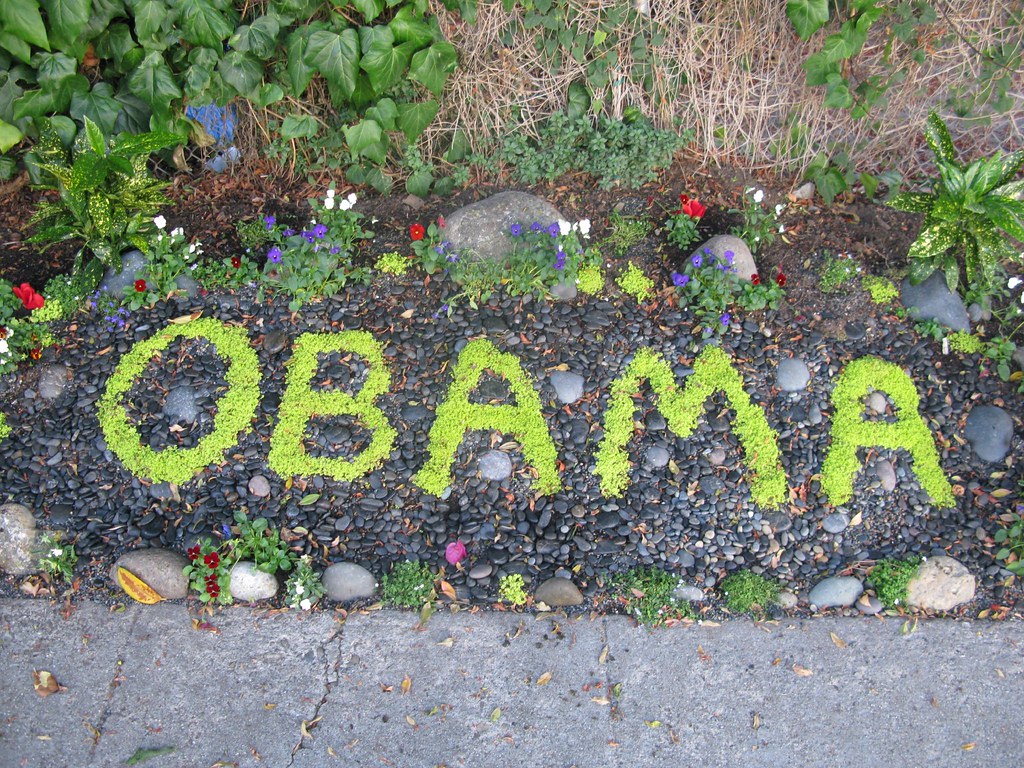
Political Landscape

not sure who the genius is but hooray!
this is down by the calabash on adeline.


Tuesday, September 23, 2008

trouble in paradise


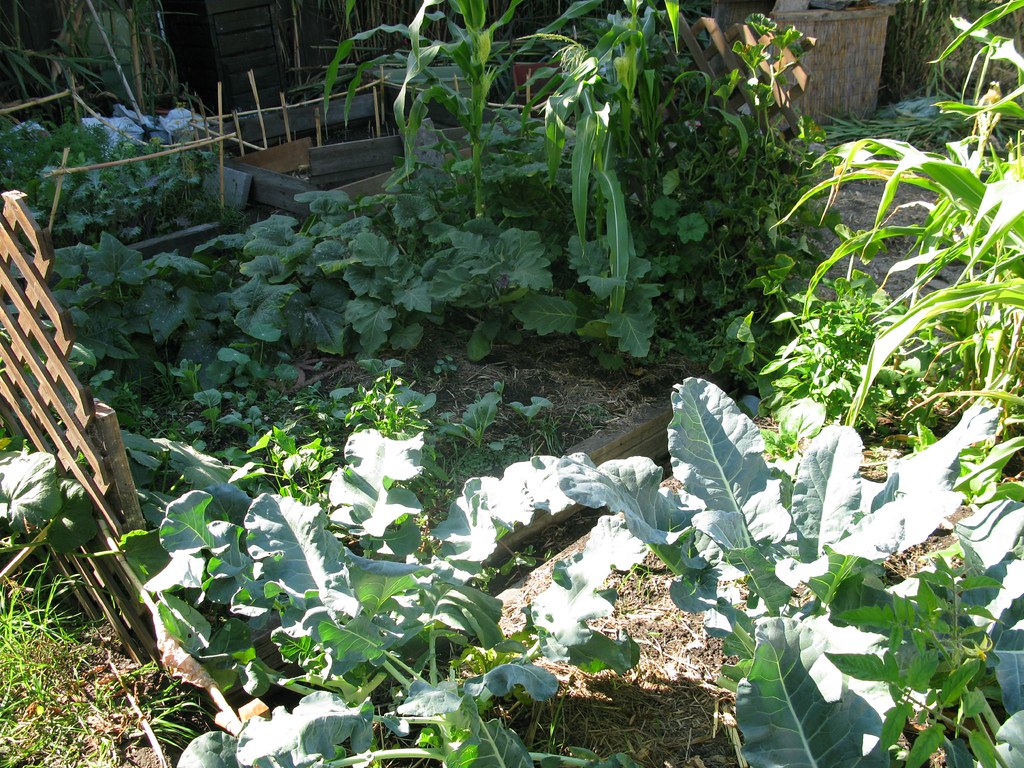
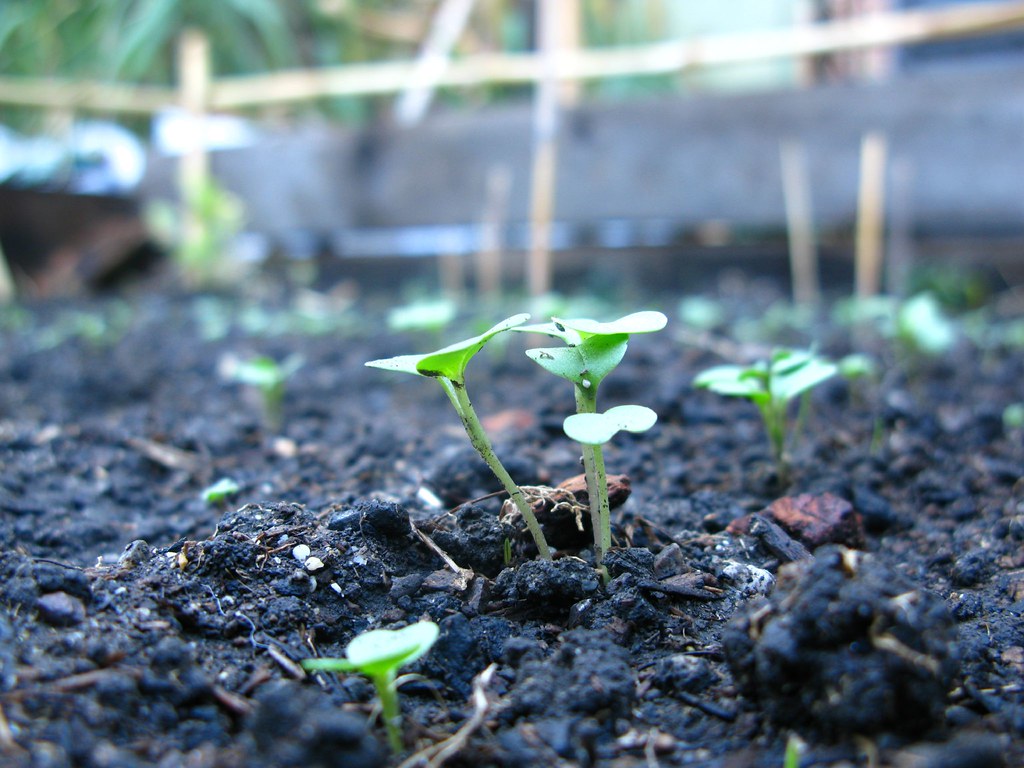
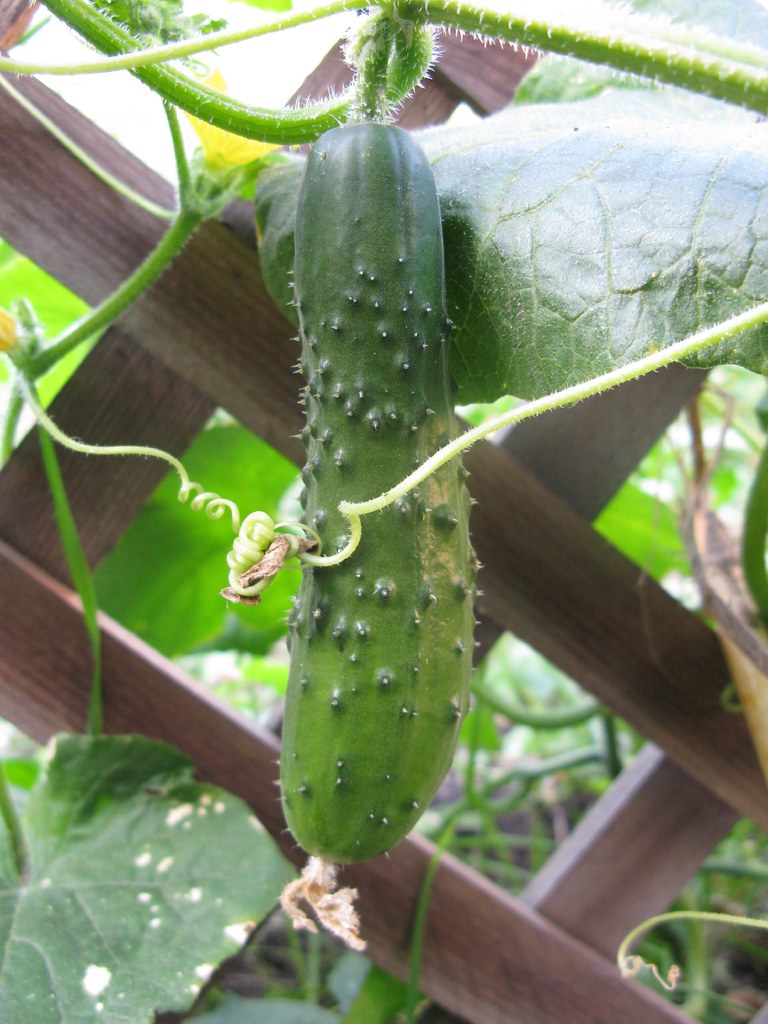
the garden continues to grow and challenge. it's producing a steady harvest right now, we just got three enormous heads of broccoli and two cauliflowers off the plants in the front, lettuce, cucumbers, carrots, chard, kale, tomatoes, and radishes are all in full swing. ripening are the winter squash, pumpkin, butternut, melons, beets, bok choy, corn. i just put in turnips, radishes, golden beets, more chard, a bunch of lettuce, chives. in the next few weeks potatoes, garlic, and onions, maybe leeks will all be planted. this is all good news and overall garden health is okay, but we're facing some pest & disease problems.
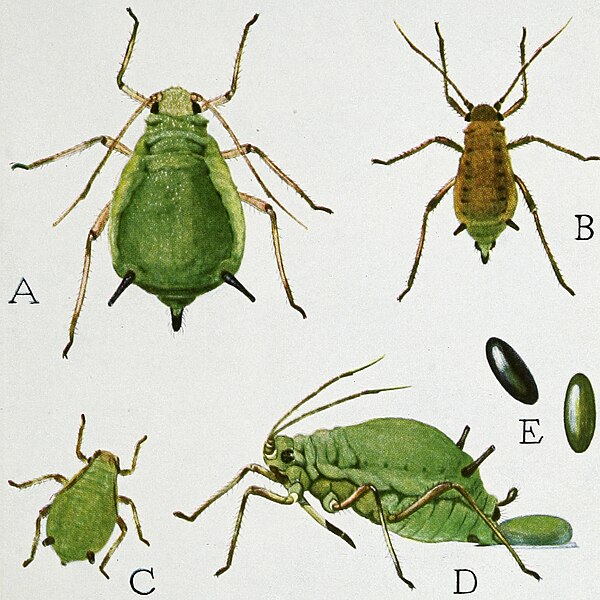


aphids: we have aphids, no ifs ands or buts. on the corn, the carrot bases, the broccoli leaves (but not the heads!). aphids, the most widespread crop pest in the world, puncture soft plant tissue with their sucking mouthparts and siphon out the sugary plant waters. in return they secrete a "honeydew" which brings us to the real crux of the aphid problem in the garden, ants. berkeley has an amazing amount of small Argentinian ants, an exotic that has quickly become ubuiquitous throughout the uban landscape. they're in our kitchen, our garbage, our compost, our freezer, our bed, our laundry, our flowerbeds, our mailbox. sometimes i'll leave the house and a few hours later find a hitchhiker.

these ants not only spread scale (a houseplant pest) and aphids but they carefully tend them, harvesting the honeydew as a food source and carrying aphids to opening frontiers of plant stems & leaves. this is a mutualistic relationship in all its glory but i happen to be on the short end. so i fight the battle on several fronts.

1 is direct control, washing or wiping off the aphids. this works surprisingly well and in some cases keeps them from coming back. ants are also adverse to mint, so i've been encouraging mint to grow in the edges of the pathways between beds. and if things are really bad (like in the compost bin) i'll spread some diotomaceous earth on the ground which is a mechanical means of killing ants, versus a chemical. all of these control methods require work and continual watchfulness. but the aphid problem is essentially one of unchecked population growth, both the ants (as exotics) and the aphids lack a sufficiently robust predator to keep their numbers down. enter the beneficials!
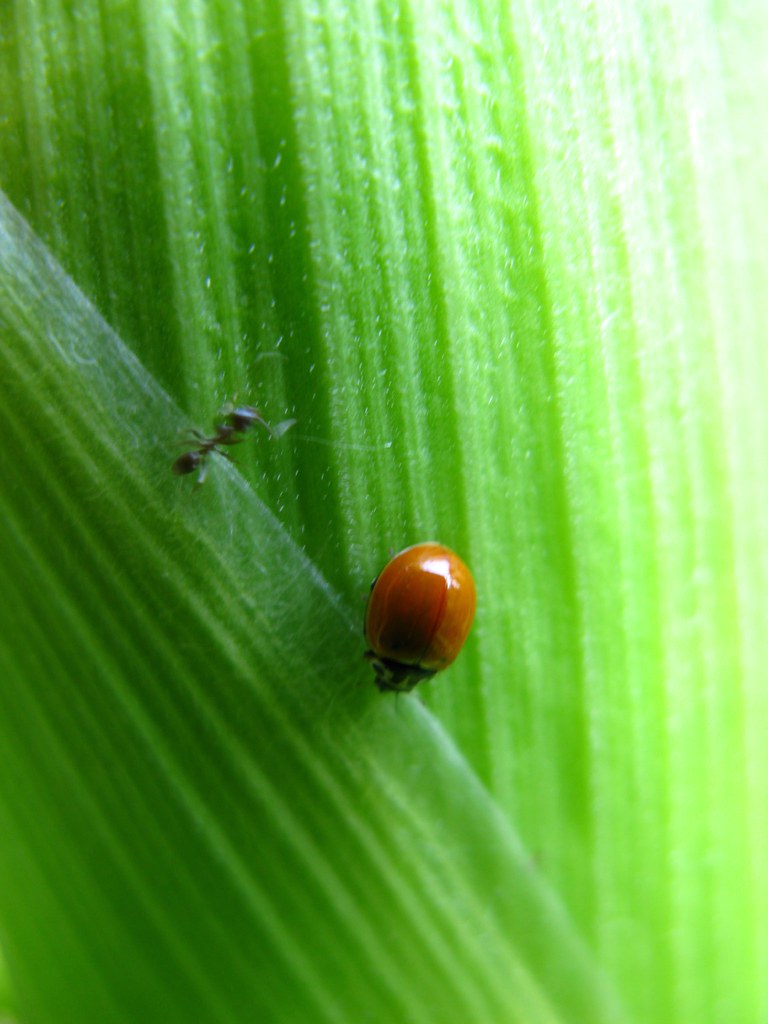


we have a lot of vegetables growing in our garden, but what we don't have is a lot of flowers. one rosemary bush is in bloom, and the dill has just started opening but that's really it. this lack of nectar resources has created a lack of the insects that naturally prey on garden pests.

perhaps most well known of these is the ladybug, a voracious aphid eater that is attracted by nectar rich small flowers like dill, yarrow, and other members of the carrot family. in fact, i didn't see a single ladybug in the garden until the dill started blooming, but now they are everywhere munching on the aphids.

this was a powerful reminder that just planting a few vegetable starts is only half the game, concurrent with that there needs to be a lot of good herbs and flowers planted to attract not only beneficial insects but pollinators as well. we lost about half of our sweet dumpling squash this year due to incomplete pollination. so i've started a campaign to fill the edges of the garden and in between the vegetables with attractive herbs and blooms. diversity is key to system stability.
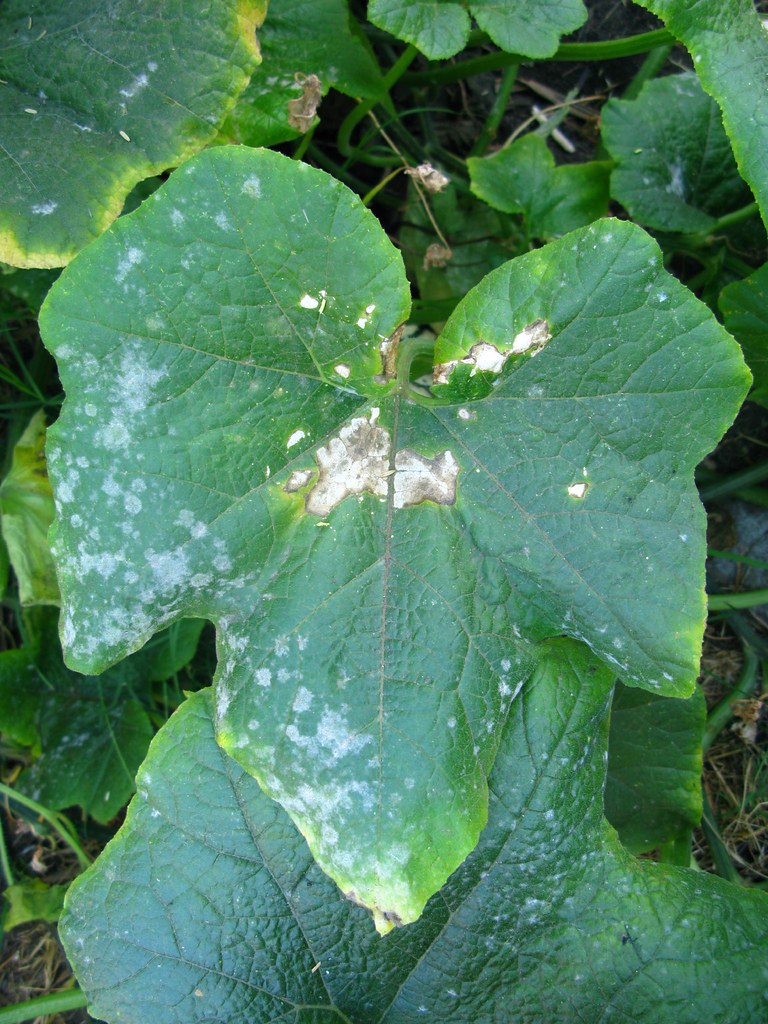


the other problem? powdery mildew. the land we're on is sort of damp, arundo reed grows in the corner, and when i dug the new bed a foot down was damp earth even though i hadn't watered there. this low-lyingness makes for prime fungal breeding grounds and as a result we get a fair amount of powdery mildew and other fungal infections on our vegetables, especially the squash and melons. now, theoretically, good rich soil with beneficial fungus and the full array of macro and micro nutrients should grow a plant that is resistant to these sort of infections. but we're a new garden, just converted from hardpacked clay lawn, and i don't think the soil community is quite up to snuff, yet. so we have mildew.

most of the pest control books recommend sulfur or copper to combat this, but we have a small garden with lot of dogs. copper is toxic, and sulfur is an irritant, so what to do? i've heard milk or baking soda spray, but haven't tried them. then i read in the ever-helpful "carrots love tomatoes" that a tea made of equisetum (horsetail) is an excellent way to not only prevent but combat powdery mildew and at the same time increase overall tissue health.

i knew where there was a nice patch of horsetail a few blocks from my house so i gathered a big handful, chopped them up, let them sit in water for two days then simmered them for a few hours. the resulting liquid was a watery-greenish and sort of stank. i put it in a spray bottle and have been religiously spraying the leaves of the squash with it for the past four days. it appears to be working! there still is mildew but it's not spreading and some of the leaves with small amounts have cleared up completely. i feel good about this and would recommend it to anyone with mildew problems, and best of all... it's free!

dealing with these problems i was surprised at how little easily countenanced information there was on how to deal with these problems sans chemicals... even "organic" ones. why didn't any of the books i read explicity say that i needed to plant plenty of herbs and flowers with my vegetables? why are the powers of horsetail only mentioned in one place? this got me thinking and i'm currently compiling an online searchable database for all would-be gardeners that allows you to easily understand which plants attract which beneficial insect and when they are in bloom which will be cross-referenced with companion planting and disease control methods. stay tuned.

AND if anyone reading this has insights into the process of growing pest free vegetables please share the wisdom.






Tuesday, August 19, 2008

The Garden Grows

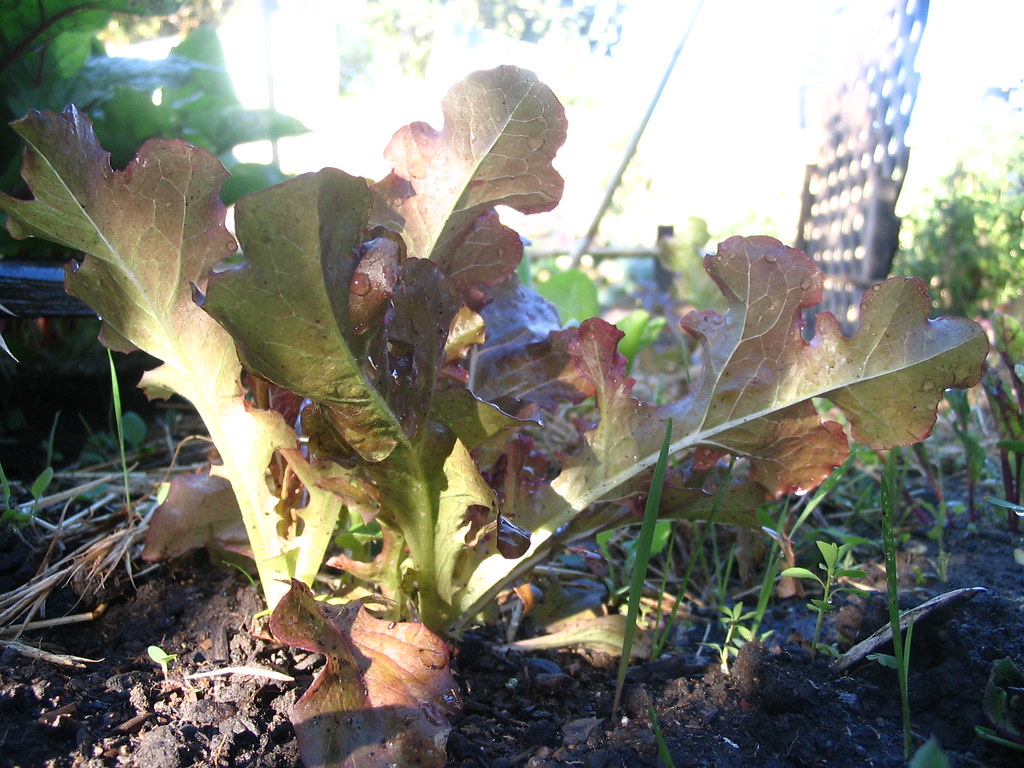
garden chipper muffins stir fry 090

so growing a garden in the city is nowadays a sort of defacto undertaking for the young and restless, worried about food production systems, pining for the good life, bored at work, and afraid of wasting a life working for something we're not sure we even want. I always had some sort of vegetable crop at all the houses i lived, usually just a few tomato plants in whatever sunniest spot was handy and maybe some basil or cooking greens. But I usually found myself spending way more cash than I expected on getting the little garden into the ground and then reaping way fewer fruits of my labor than expected. So this year due to a set of unfortunate financial circumstances I decided I could grow a garden on the cheap.


here's a few tips and tricks i've got thus far and if you've got any i'd love to know them.

1. Get Free Compost. in Berkeley they actually give away as much free compost as you can haul the last friday of every month. it's the municipal waste stream so I end up using digested-berkeley to nourish the plants. if you live elsewhere look around, i bet there's compost just waiting to be had.
1a. make your own compost! this is a bit harder, but stay tuned for a non-stop sort of action blog post on the ins & outs of the compost heap.

2. Don't Buy Starts Buy a Packet of Seeds, unless I find a really good deal on starts like City Slicker Farms that runs a little nursery where the starts are priced by donation, I buy seed. look here for a list of awesome seed companies that you can get mouth watering catalogues from.

3. Mulch to save water, and shape the beds to save water. in super hot desert areas they actually farm in depressions they've dug out of the caliche and filled in with compost in order to capture every drop of water for the vegetables.

5. I borrow everything I can. tool lending library here in berkeley, neighbors elsewhere, share a chipper, share a shovel.

6. Alameda County offer free lead testing & consultation, growing backyard vegetables is only a win win when the soil is non-toxic. go here

7. Freecycle Giveth and Me Giveth Freecycle

8. rather than thinning baby beets and throwing out half the crop, separate the clumps and replant the ones taken out, it can double the patch size. same for anything really.

9. I collect any free materials I can such as lumber, glass, brick, stone, buckets, hoses, and wire. a good garden has a good infrastructure and the cost of these things can add up very quickly if you go down to home depot and whip out the visa.

cucumbers, radishes, corn, squash, broccoli, honeydew, eggplant, lettuce, dill, chives, peppers

things that i'm planting now from seed:

turnip (soon as i find some seeds, they're not the most popular vegetable apparently)
cabbage
radish
lucinato kale
golden beet
pak choy
borage
spinach
lettuce

remember what it used to look like?

Tuesday, July 15, 2008

urban homesteading

as food prices continue their steady slog to the upper stratosphere, we as a household decided it was high time we skipped capital accruing middle-people, put our own seeds in the ground and transformed (bit by bit) our rental oasis into a productive urban homestead. self-reliance in the city is a new battle-cry being hollered back and forth in blogs, magazines, and workshops. a steady & disheartening wash of internet research has made us suspicious of what we see in the supermarket, each product label the source of debate and moral tussling. living in the citycore fosters a disconnected & sallow engagement with our food production, and while farmer's markets bring us closer it just seems wasteful to not break up the hardpacked backyard clay and let seeds do what they do best. grow.

moreover, we are interested in quantifying this process, seeing just how it all pans out. measuring the yields, monitoring the air, soil, and water. biological diversity in the garden edges, temperatures in the middle of the pile, money saved, money spent. we are interested in the process the product and the documentation.
soil=garden=food=data=art=sharing=learning
so stay tuned we'll need all the help we can get.

Thursday, May 22, 2008

class is out!


welcome back everybody, it's been a while, but it sure is good to see all your friendly faces smiling around our little campfire. ah. smell that sagebrush? hear that coyote? what a world friends! what a world!
a few updates:

they got the raccoon!

"RE: Dead Raccoon
Thanks, we'll get it. "

jacob perkins & the nobody
are on tour
i'd recommend the takilma show if you can make it

i rode through the posey tube today. (following excerpt from a gchat conversation)

"the bike path was exactly as wide as one bicycle. on the left was a rusty handrail, then a 6ft drop to the crowded busy freeway. on the right was a dirty white tile wall that curved up over me to form the top of the tube. if i deviated just the slightest fraction i would hit either the wall or the handrail. the tube is 3545ft long. dark & dirty. the fumes were so thick and acrid that my eyes were burning the whole way and i choked as i pedaled up the slight slope. the sound in the tunnel was a huge roar with intermittent honks. big trucks passed just feet from me, but i was oddly above the cars, looking down on them. there was a pedestrian walking in the opposite direction and he literally had to climb up on the handrail and i had to brush against the white tile to make it past each other. i almost had a panic attack."

they also found out that 1km below the ocean floor there are organisms that may be 111million years old. and that 85% of snowflakes form around bacteria.

here's an idea...
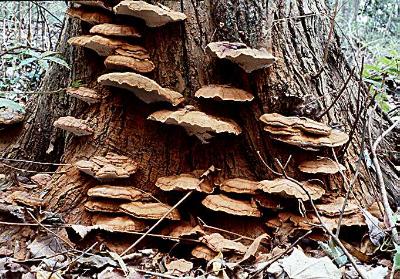
some bracket fungus species exhibit nondeterministic growth, i.e. they're able to alter their growth habits, size, and form in response to environmental variables. these conk fungi have hard, wood-like fruiting bodies that are tough and durable. i suggest that bio-engineered fungus of this type may be able to provide shelter, furniture, and entire houses. a hybridized, gen-mod spore could be cultured on any bio-waste stream and assume the programmed form. grow a wall, a roof, a chair, a table. when the useful lifespan of that object had come to and end, the mushroom would produce spores, which could be harvested and taken to the next domicile or homesite, where the process could begin again. the old conk would simple decompose.


Sunday, April 27, 2008

Mushrooms to clean up dioxin in Fort Bragg California

I am a huge proponent of myco-remediation and I often incorporate a bio-remediation stage in site development proposals. That's why I was just tickled pink to read this article in the NYTIMES today.

http://www.nytimes.com/2008/04/27/us/27bragg.html

The legacy of the large timber industry that once owned northern California is large tracts of contaminated land where their mills once stood. In the case of Fort Bragg the municipality was given rights to a 420 acre strip of seashore land that came with a typical toxic-soils caveat... they could have the land only if they dealt with the contamination, specifically five hot-spots that had high levels of dioxin. the options tabled to deal with the soil were either to haul the dirt away, or bury it in a lined landfill on site.

but then they contacted Paul Stamets, mushroom-guru cum-savvy eco-business warrior, and he suggested turkey tail & oyster mushrooms (medicinal tea & stir-frys, respectively). Dioxin (C
4H4O2) is an organic molecule with no heavy metals or radioactive isotopes, and as such it's ripe fodder for the tenacious mushroom mycelium that can break apart the chemical bonds and convert the basic atomic building blocks of carbon and hydrogen into rich mushroom proteins & sugars.

The Fort Bragg community voiced their support and were given a few yards of dioxin contaminated soil & facilities to conduct a myco-remediation experiment. It might be some years before we know for sure how well this works, but it's hopeful to see otherwise dangerous contaminants being turned not only into benign substances but straight into medicine and food.

For those who missed it, the recent San Francisco oil spill, resulting from an inebriated bar pilot slamming a tanker into the footing of the Bay Bridge, was cleaned up using mats made of human hair donated by the city's stylists and barbers. The mats were then hauled off and DIGESTED... oil & all, by oyster mushrooms, also provided by Paul Stamets.

http://www.sfgate.com/cgi-bin/article.cgi?f=/c/a/2007/11/14/MNPQTBLE4.DTL

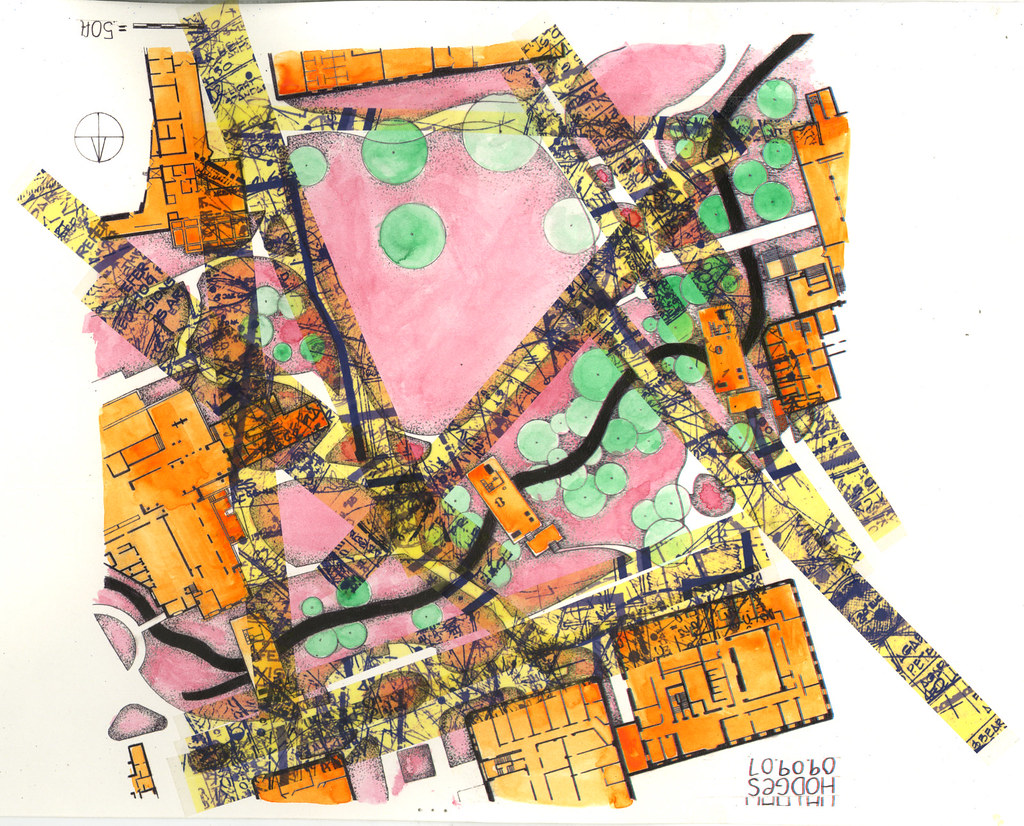
and finally here's the first board from my final project last year where I proposed deconstructing the 101 Freeway in the Presidio and digesting the asphalt using mushrooms.

Saturday, April 26, 2008

saturday afternoon.

working in studio on a rhino model of a wall.
listening to the Shu Show... www.takilmafm.com most saturdays 4ish-8ish best show on the net.
or your money back
this wall is crashing my computer.

Monday, March 31, 2008

latest poll analysis

well, due to a crummy turnout at the polls the results are pretty much worthless, not enough data to produce statistically significant conclusions. so go fly a kite. look at this, it's more russian stuff, can't get enough really, from a festival called "Arch stoyanie" that I first read about in PROJEKT magazine.
but you have to look at this slideshow it's beautiful.

http://www.arch.stoyanie.ru/eng/project/11/pr.html

CLICK ON IMAGE TO GET CLOSER